
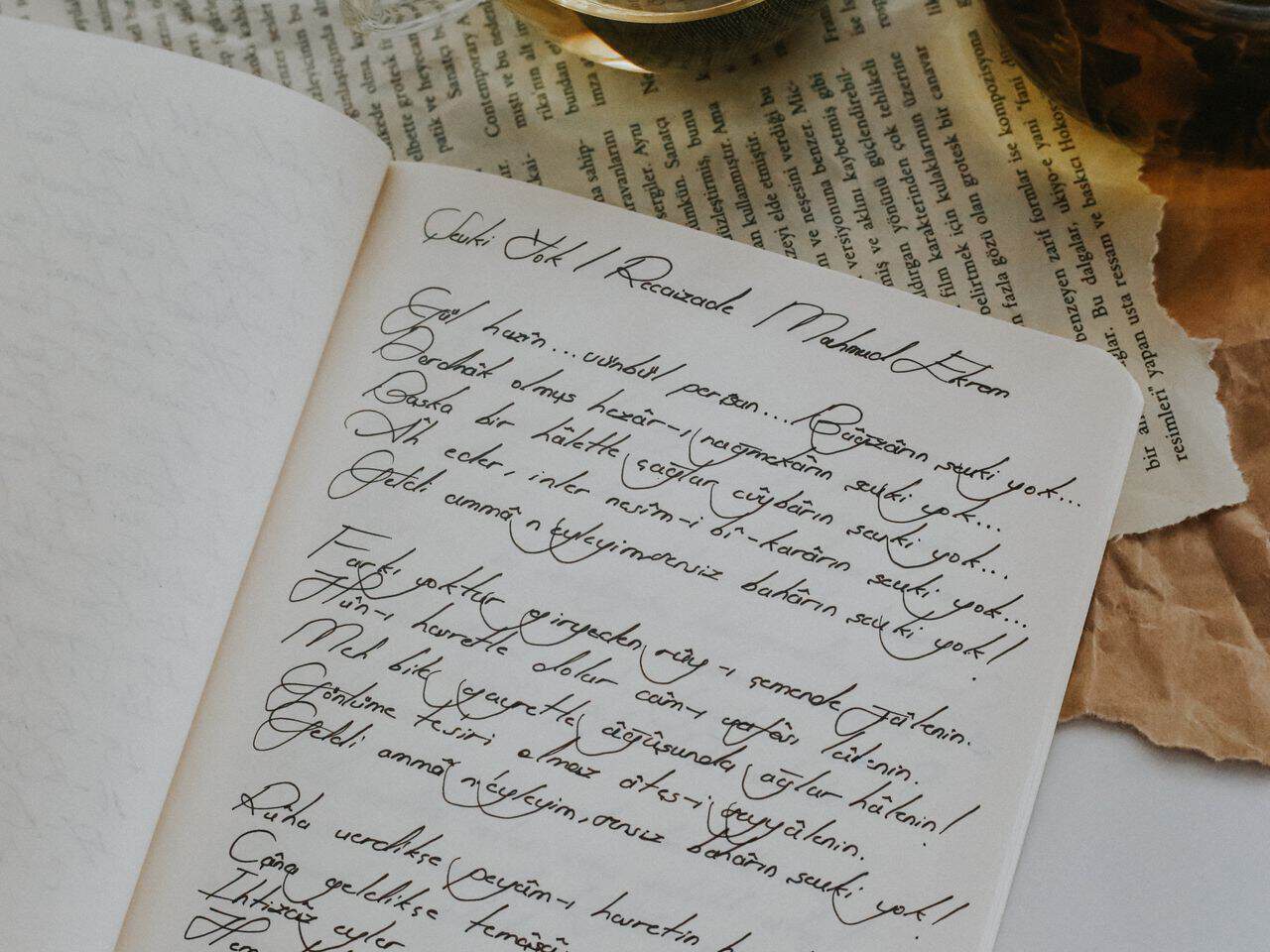
Writing a poem can seem difficult when you are staring at a blank page and wondering where to begin. The truth is that poetry does not require complicated words or perfect rhymes. A good poem begins with an emotion, an image, a memory, or even a simple thought that you want to express in a meaningful way.
Whether you want to write about love, nature, loneliness, friendship, personal experiences, or everyday life, poetry gives you the freedom to turn your ideas into something creative. The most important part is to write honestly and allow your own voice to develop naturally.
Start With an Idea
Every poem begins with something that catches your attention. It could be a feeling you cannot explain, a conversation you remember, a place that means something to you, or a small moment that stayed in your mind.
Find Something You Care About
Think about an experience or subject that creates a strong emotional response in you. When you genuinely care about the subject, your writing is more likely to feel authentic. Instead of trying to choose something that sounds poetic, choose something that feels meaningful to you.
A rainy evening, an old photograph, a goodbye, a childhood memory, or a quiet morning can all become the foundation of a poem. Poetry often begins with ordinary things and gives them a deeper meaning.
Begin With a Feeling
Sometimes the easiest way to start writing is to identify an emotion. Ask yourself what you are feeling and why you feel that way. You do not have to explain the emotion immediately. Instead, try describing how it feels through images, memories, sounds, or physical sensations.
For example, instead of simply writing that you feel lonely, you might describe an empty chair, a silent room, or a phone that never rings. Such images allow readers to experience the emotion rather than simply being told about it.
Turn Ideas Into Images
Poetry becomes powerful when abstract emotions are connected to concrete images. Rather than explaining everything directly, allow readers to imagine what you are describing.
Use Sensory Details
Think about what your subject looks, sounds, smells, tastes, or feels like. Sensory details can make a poem feel more immediate and alive. A description of cold wind against someone’s face can communicate sadness or isolation without directly using the word “sad.”
The more specific your images are, the more memorable your poem can become. Instead of saying that a place was beautiful, describe the golden light across the walls, the sound of leaves moving in the wind, or the smell of rain on the ground.
Use Metaphors and Comparisons
Metaphors can help you express complicated feelings in a simple but imaginative way. You can compare an emotion to an object, place, season, or natural event.
A broken relationship might become a house with an empty room. Hope might become a small light visible through a dark window. These comparisons give readers another way to understand the emotion behind your words.
Choose the Right Form
Poetry does not have to follow one specific structure. Different forms can create different moods and rhythms, so experiment until you find a style that suits your idea.
Try Free Verse
Free verse is one of the easiest forms for beginners because it does not require a fixed rhyme scheme or regular meter. You can decide where each line ends and how the poem should look on the page.
This freedom allows you to concentrate on your ideas, images, and emotions rather than worrying about following strict rules. Many contemporary poems use free verse because it can sound natural and conversational.
Experiment With Rhyme
Rhyming poetry can create rhythm and make certain lines memorable. However, forcing every line to rhyme can sometimes make a poem sound unnatural. Instead of choosing a word simply because it rhymes, choose words that strengthen the meaning of the poem.
You can experiment with occasional rhymes, internal rhymes, or a loose rhyme pattern. The goal is to make the sound support the poem rather than allowing the rhyme to control the writing.
Pay Attention to Rhythm
Even poems without rhyme have rhythm. The length of your sentences, the arrangement of words, punctuation, and line breaks can all affect how a poem sounds when read aloud.
Read your poem slowly and listen to its natural movement. If a line feels difficult to say, consider changing the wording or breaking it differently. Reading aloud is one of the simplest ways to discover the rhythm hidden inside your writing.
Write the First Draft
Your first draft does not need to be perfect. In fact, trying to make every line perfect immediately can make writing much harder.
Let the Words Come Naturally
Give yourself permission to write badly at first. Put your thoughts onto the page without constantly judging them. You can improve the language later.
The first draft is mainly about discovering what you actually want to say. Sometimes the strongest idea in a poem appears only after you have written several lines.
Avoid Explaining Too Much
Poetry often becomes stronger when the reader is given space to interpret the meaning. You do not need to explain every emotion or image.
If an image already communicates sadness, you may not need to follow it with a sentence explaining that the speaker is sad. Trust your images and allow the reader to participate in discovering the poem.
Revise Your Poem
Revision is where a poem often becomes clearer, stronger, and more precise. A first draft gives you material to work with, but revision helps you decide what truly belongs in the final version.
Remove Unnecessary Words
Read every line carefully and ask whether each word contributes something. Poetry often benefits from concise language. Removing unnecessary words can make an image sharper and give important lines greater impact.
Do not remove words simply to make the poem shorter. Remove them when they repeat an idea, weaken an image, or interrupt the rhythm.
Strengthen Your Language
Look for vague or familiar expressions that could be replaced with something more specific. Instead of using a general description, ask yourself what you actually saw, heard, felt, or remembered.
Specific language gives a poem its individual character. Two writers can describe the same sunset, but their poems become different when they focus on different details and experiences.
Read the Poem Aloud
Reading aloud is an essential part of revision. You may notice awkward phrases, unnecessary pauses, repeated sounds, or lines that do not flow naturally.
Listen to the poem as if you were hearing it for the first time. Notice which lines feel powerful and which ones feel weak. Your ear can often identify problems that are difficult to see while reading silently.
Develop Your Own Voice
There is no single correct way to write poetry. Some poets prefer simple and direct language, while others enjoy elaborate imagery and unusual structures.
Read Different Poets
Reading widely can help you understand how different writers approach language, rhythm, imagery, and structure. Explore classic poetry as well as contemporary work and pay attention to what makes certain poems memorable to you.
Instead of copying another writer’s style, use reading as a way to discover what you like. Over time, your influences will combine with your own experiences and gradually shape your individual voice.
Write Regularly
Your poetic voice becomes stronger through practice. You do not have to write a complete poem every day. Even a few lines, observations, or images can help you develop your creative instincts.
Keep writing even when some poems do not turn out the way you expected. Every attempt teaches you something about language and about the kind of writer you want to become.
Let Your Poem Be Personal
The most meaningful poems often contain something genuine about the person who wrote them. You do not need to reveal every private detail, but your perspective should feel real.
Write about what you notice, what you remember, what you question, and what you feel. Your experiences do not have to be extraordinary to become poetry. Sometimes a small personal moment can carry an emotion that many readers recognize.
Final Thoughts
Learning how to write a poem is less about memorizing rules and more about learning how to observe, feel, and express yourself through language. Start with an idea that matters to you, develop it through images and carefully chosen words, experiment with form, and give yourself permission to create an imperfect first draft.